Behind the music: “I Love You, My Darkness” & “Release me”
Part of a series exploring each piece on my debut album, Look How Brightly
Both of these songs were written for contralto Jess Dandy, a musician who has been central to my creative life for many years. She has a voice that feels timeless and approaches music with an honesty and depth that constantly remind me why I write music. Jess also sings on BARDO, another piece on this album, and I have written elsewhere about her unique artistry and our long-standing collaboration.
These two short songs, though very different in tone and origin, share a thematic and spiritual core. Each circles the idea of surrender. I Love You, My Darkness looks inward to self-acceptance, while Release Me looks outward to letting go.
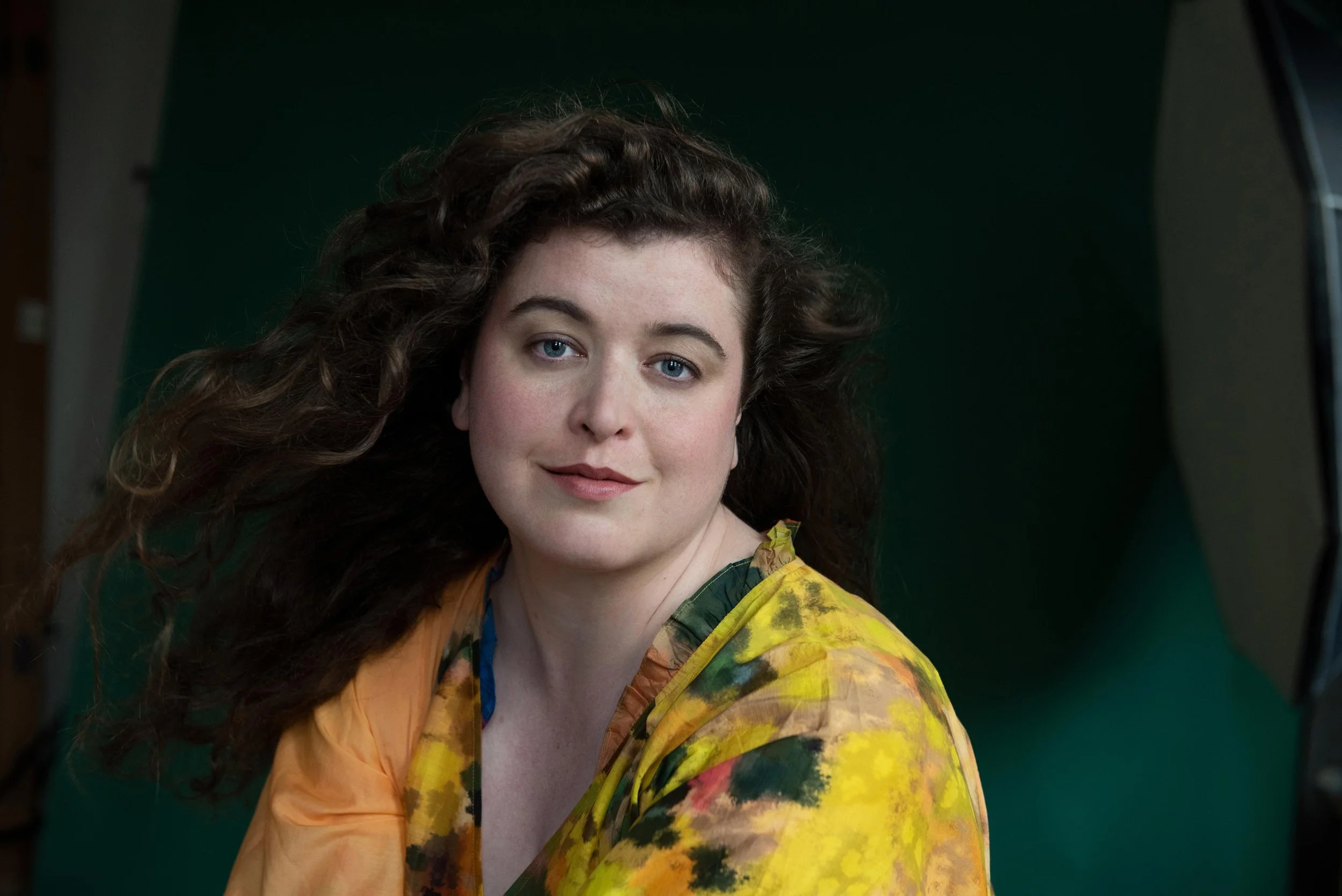
Portrait of Jess Dandy, contralto, by Clare Park
I Love You, My Darkness
I Love You, My Darkness began as a piano interlude within a song cycle I wrote for Jess and pianist Dylan Perez, setting English translations of Rilke’s poetry about darkness and learning to embrace what lies within us rather than fearing it. The cycle explores that profoundly Rilkean tension between solitude and connection, between turning inward and reaching outward for something larger than
ourselves.
While finishing one of the piano interludes, I had an intuitive impulse to add a few words to the music, a simple phrase that seemed to distil the essence of the cycle: I love you, my darkness. Those words came almost as a whisper and felt essential to include.
The piece is very short and gem-like, yet in its brevity it holds something complete. The piano ripples with quiet fluidity while the voice offers a single melodic thread, fragile and assured.
Together they form a brief meditation on unconditional self-acceptance: the idea that our darkness is not something to banish, but something to meet with tenderness. In that sense, I Love You, My Darkness is not only a song, but a kind of prayer.
Release Me
In contrast, Release Me turns outward. It is a plea or invocation, a surrender to whatever force lies beyond us. Like BARDO, it draws on my interest in states of transition: between life and death, holding on and letting go, containment and release.
The song emerged as one of my “intuition songs,” short pieces created entirely through improvisation and instinct. I began at the piano, as I often do, improvising until something resonated. From there, the words surfaced almost of their own accord, shaping and being shaped by the music in equal measure. The process defies the usual question of “which comes first, the words or the music?” In these songs, both evolve together as two parts of the same breath.
I am not entirely sure what Release Me is about, at least not in any fixed sense. It speaks to several possibilities at once. It could be the voice of someone at the end of their life, asking to be released into whatever comes next. It could be a cry for freedom from pain, or the exhaustion of someone yearning to be unbound from their own suffering. There is also, perhaps, a quieter current of self- destruction, a longing to be broken open so that something new might be born.
The text unfolds in waves of invocation:
Come to me, release me, unravel me, melt me, break me.
It pleads, and it yields. The repetition of “come to me” feels less like desperation and more like devotion, an invitation to be transformed. The music mirrors that state, gentle yet charged, carrying both fragility and inevitability.
Two meditations on surrender
Though the two songs came from different places, one from the structured world of a Rilke cycle, the other from pure improvisation, both explore what it means to let go of control, certainty, and resistance.
At the centre of both is Jess Dandy’s extraordinary voice. Hearing her sing these songs, I am reminded that music can still reach the places words alone cannot: the spaces between surrender and transformation where darkness meets release.