John Tavener's ‘Krishna’: Beyond the Operatic Lens
How should we listen to John Tavener's Krishna?
That was the question I left Grange Park Opera turning over, and by the end of the evening I had come to think it was the only question that mattered.
Almost every discussion of the work has begun from the assumption that Krishna should be understood as an opera. This is understandable. It received its world premiere at an opera company, it is published within an opera catalogue, it was performed by opera singers, and its reception has been shaped almost exclusively by opera critics. Within that context, familiar questions naturally follow. Does the drama sustain itself? Are the characters convincing? Does the narrative build? Is it a good opera?
They are perfectly reasonable questions. I'm just not convinced they are the questions Tavener was asking.
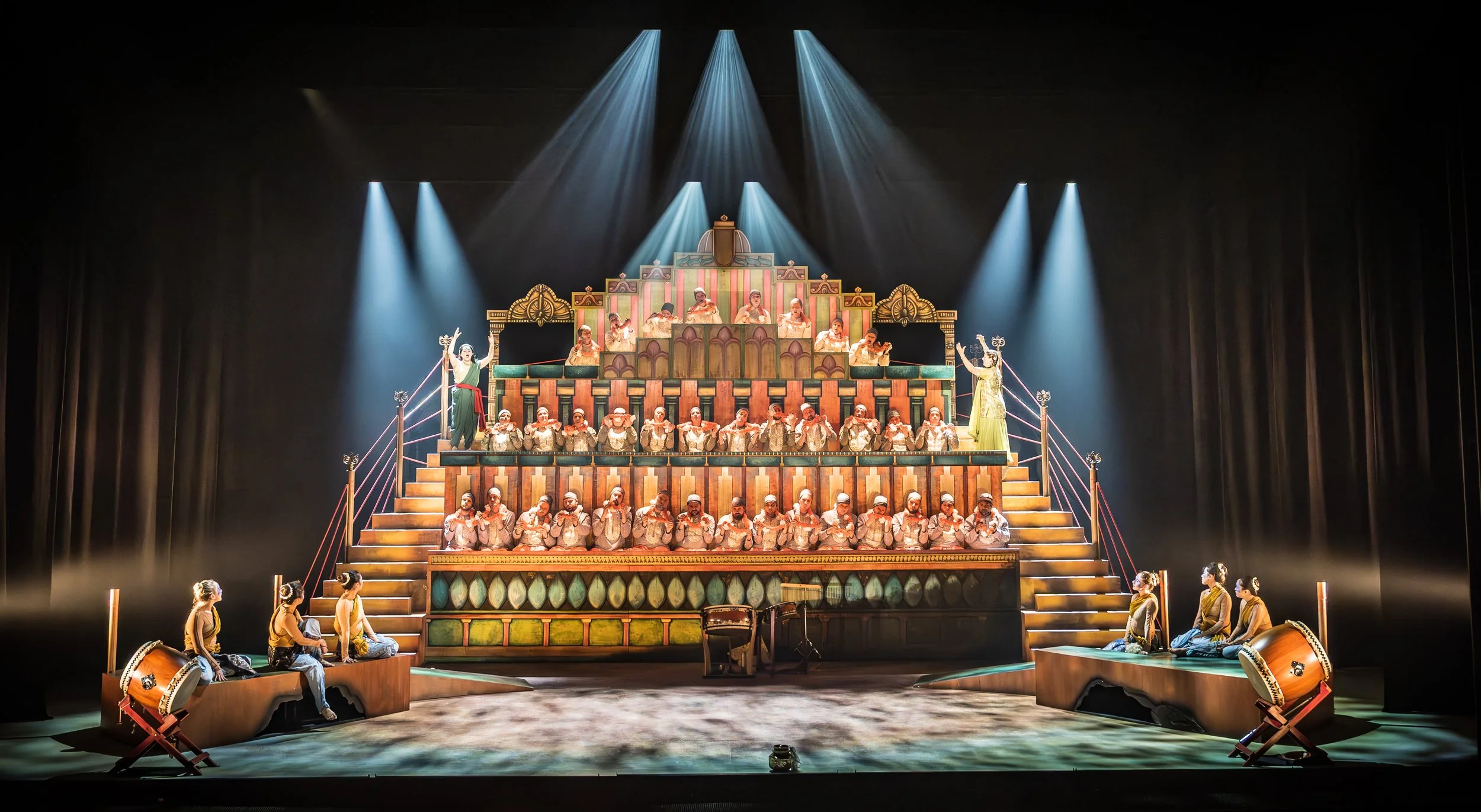
Tavener himself seems to have avoided calling Krishna an opera. He described it instead as a "mystical pantomime," and the alternative title, The Play of Krishna, suggests an artist trying to define a work that could sit adjacent to opera without being governed by its conventions. That distinction matters more than it might first appear.
As a composer, much of my own work has explored the relationship between music, ritual and spirituality, and the ways music can create space for contemplation rather than communication. That inevitably shaped how I encountered this piece. Rather than waiting for dramatic momentum, I found myself listening for something else, even as I noticed how hard the habit of operatic expectation is to shake off. Opera houses, publishers and critics don't simply present works; they shape the expectations through which we encounter them. Once a piece is billed as an opera, it is remarkably difficult not to experience it as one.
Much of Tavener's later music, though, seems less interested in dramatic development than in creating sustained states of attention. The repetitions and episodic structure of Krishna never struck me as compositional shortcomings so much as something closer to ritual: a sequence of actions that guides participants through an experience without needing continually to intensify or entertain. Many religious ceremonies unfold in exactly this way, and the more I listened, the more Krishna seemed closer to that kind of experience than to conventional opera: inviting not a drama to be followed but a presence to be sustained, in which listeners remain with their own thoughts while being drawn gradually towards something beyond themselves. Read this way, what to some looks like a lack of momentum is not a failure to generate drama; it's a different aim altogether.
I spent much of the performance asking not where the drama was, but where the contemplation was, a question prompted not by any single directorial choice but by the sheer density of theatrical information unfolding at once. There were often four incarnations of Krishna on stage simultaneously. An on-stage percussionist moved between three separate drumming stations. The chorus were present throughout, frequently drawn into the staging. Six dancers occupied the stage for much of the performance, alongside a narrator and the rest of the cast. There was a lot going on.
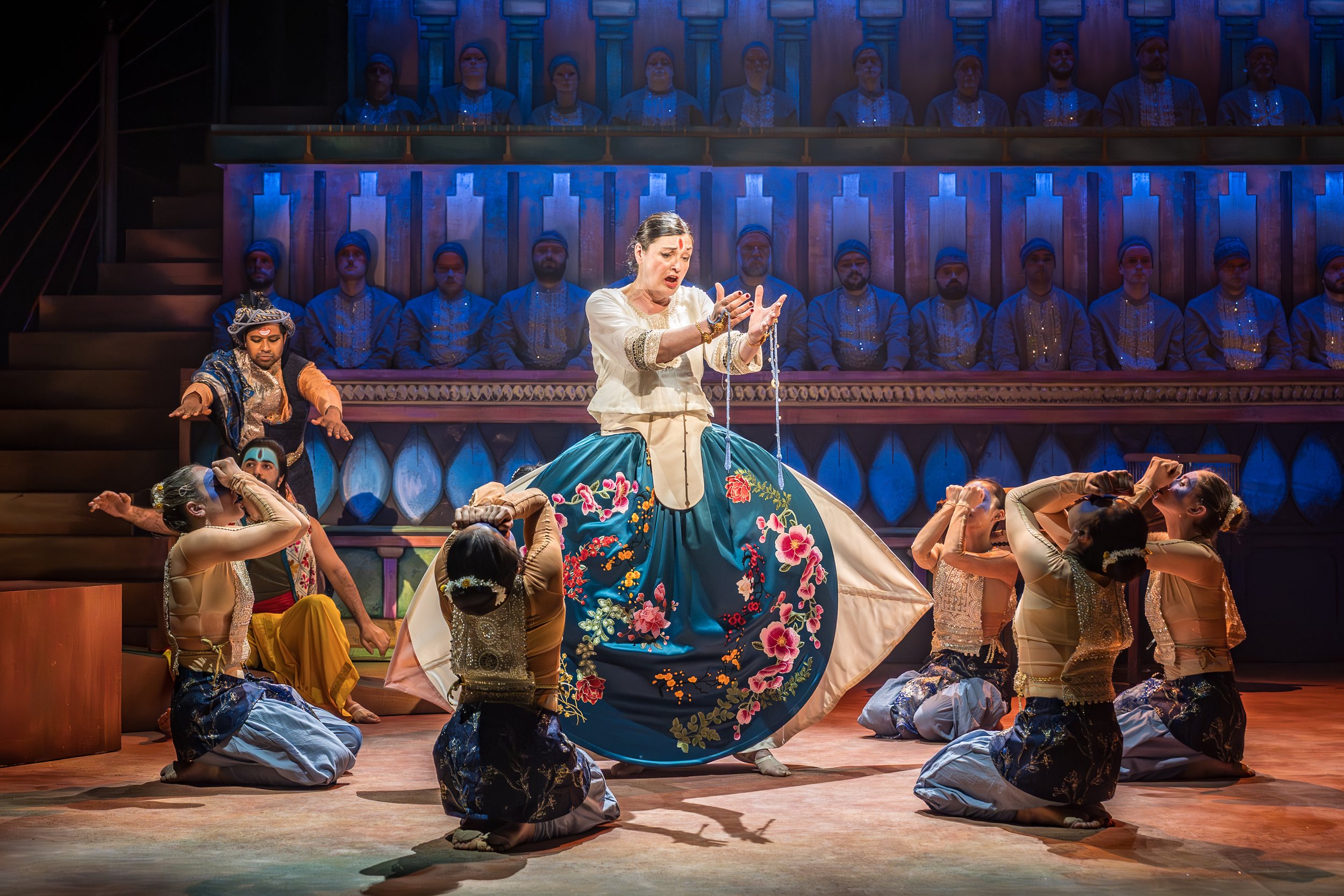
None of this is at odds with Tavener's own vision of a pantomime, which invites exactly this kind of combination of theatrical elements, and all these elements bring a unique power to the piece. But there seemed to be a temptation to animate almost every moment of music, and the cumulative effect, however considered each individual decision may have been, was an almost continuous stream of visual information. It left me wondering whether the hardest thing about staging a piece conceived to contemplate the divine is not deciding what to add but deciding what to leave alone. Some music doesn't ask to be illustrated; it invites you to inhabit it. This gives audiences room to complete the work inwardly for themselves. That is where transformation becomes possible.
That thought crystallised in the scene later extracted as the "Love Duet." Here Tavener writes music of extraordinary tenderness, and I found myself wishing the production had trusted it a little more. Not because the staging was ineffective, but because the music already seemed to contain everything it needed.
None of this is to suggest the music is beyond criticism. There were moments when my concentration drifted, and others where I wondered whether the score always sustained the state of attentive listening it seemed to aspire to. But that is a different claim from saying the work is fundamentally flawed, or should never have been staged.
Krishna presents unusual challenges, musically and theatrically. It is a late work by a composer who spent much of his creative life searching for ways music might offer an encounter with the sacred. Whether or not one shares Tavener's theology is almost beside the point. Like much sacred art, Krishna feels less like an object of aesthetic judgement than an offering placed before its audience for contemplation. The question is perhaps not whether it produces transcendence at every moment – what music does? But whether it creates the conditions in which transcendence might become possible.
There are other important conversations the work invites. Tavener was explicit that he wished to avoid writing "pseudo-Indian" music, yet the score brings together ritual instruments from several distinct traditions: a Native American powwow drum, Tibetan temple bowls, and an Indian dholak. That search for a universal sacred language recurs throughout his later output, and whether it can be realised without flattening distinct religious and cultural traditions into a single spiritual aesthetic is a serious consideration. This certainly shaped my listening, but it wasn't, in the end, the question that stayed with me most.
Grange Park Opera has achieved something extraordinary by allowing us to encounterKrishna, and whether this first production is definitive seems almost besides the point. The more interesting consideration is what future productions (and audiences) might discover if they approachedKrishnaless as an opera requiring continual dramatic animation, and more as the mystical pantomime Tavener himself imagined. Then the question is no longer whether Krishna is a successful opera. It is whether we have been listening to the wrong piece.