Why is Marie Stopes played by a man?
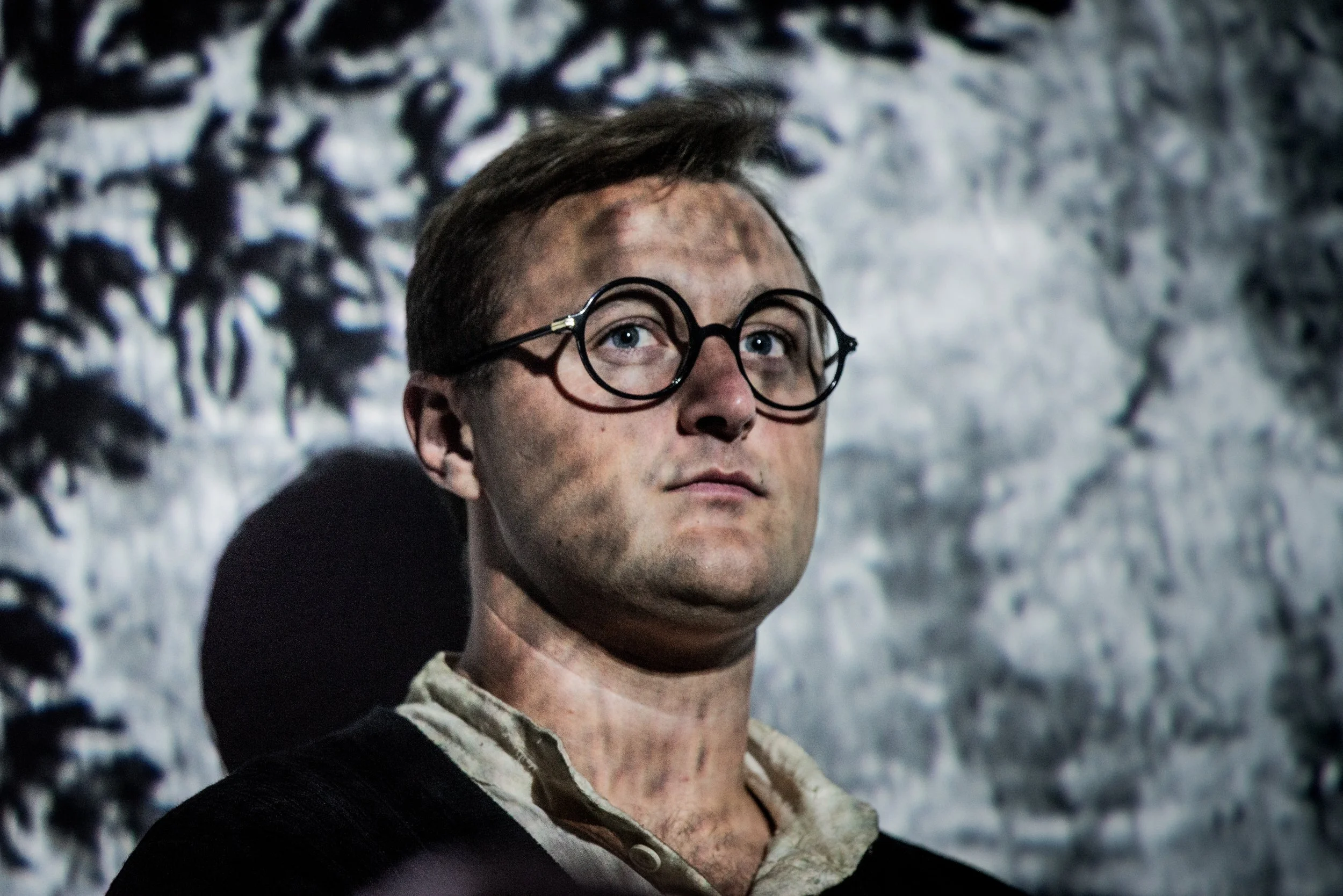
One of the most common questions I’ve been asked about my opera Dear Marie Stopes is: “Why is Marie Stopes sung by a man?” It’s a good question—and there are two main answers.
The first is practical.
The libretto is constructed from fragments of letters Marie Stopes received from the public in response to her landmark sex manual, Married Love. Most are from women, but there are plenty from men too. With a cast of three singers, I needed a mix of female and male voices to play multiple “characters”, as well as someone to sing Marie Stopes herself. All three performers also take on multiple roles throughout the piece.
Because we hear from so many women in the libretto, I needed at least two female singers to do it justice. I chose Alexa Mason (soprano) and Jess Dandy (contralto) for the expressive range they bring between them. But when Marie Stopes appears, halfway through the piece, her voice needed to feel new and distinctive—to stand apart from her anxious correspondents.
A third female singer for Marie Stopes would be the obvious option. But that would remove a male presence from the stage, which felt important given the subject matter of sexual relationships and gender stereotypes. So a countertenor—in this case the brilliant Feargal Mostyn-Williams—was the ideal solution.
This allowed a male voice (spoken word) on stage to deliver some of the letters written by men, while also providing a distinctive voice in a female register when Marie Stopes appears, clearly set apart from the other female voices.
The second reason is artistic. Much of Married Love, and the tens of thousands of letters written in response to it, deals with the relationships between men and women; gender stereotypes in and beyond sexual relationships; attitudes to male and female sexuality; and women’s bodily autonomy versus male entitlement. In short: a complex web of ideas about gender, sex, and power.
While it might be more ‘realistic’ to have all female voices sung by women, having a male presence sing a female role here is not intended as parody or inversion, but opens up new layers of interpretation.
For example, in one scene Marie Stopes sternly forbids her young female correspondent (who has tragically contracted gonorrhoea—practically incurable at the time) to have “physical connections”, not to marry, and to give her fiancé up to another woman. We hear a woman writing to another woman at a time of need, but we see a man forbidding a woman to have sex or to marry. In the context of venereal disease in the 1920s, this may have been good advice—I’m not sure. But the power of this exchange, especially within the wider themes of the opera, invites the audience to think differently about the ideas at play in a way a more "true-to-life" depiction might not.
This is also why I chose a contralto. Not only do we have a man singing a female role in a female register, we also have a female—Jess Dandy—voicing letters from men using the lowest part of her range. Her first line, in fact, is from a very worried man concerned about his premature ejaculation. While the countertenor singing Marie Stopes may be the most immediately striking choice, allowing the music and voice types themselves to explore gender stereotypes was integral to the piece from the outset.
Nowhere is this more powerful than when we hear Jess singing in her lowest range and Feargal in his highest. With such rich and complex source material, it felt important that the music, in some way, supported and reflected its central themes. I hope that using different voice types to raise questions about gender stereotypes goes some way towards achieving this.
It is also important to acknowledge that Marie Stopes herself is now understood as a complex and controversial historical figure. Alongside her pioneering work in birth control and sexual health, aspects of her legacy—particularly her association with eugenic ideas—are the subject of ongoing debate. The opera does not attempt to resolve these tensions, but presenting her through an unexpected vocal identity adds another layer to how we interpret and question her character.