Behind the music: “One is Fun”
Part of a series exploring each piece on my debut album, Look How Brightly
I wanted to write a piece that explored what happens when two identities are so closely bound together that they can no longer tell where one ends and the other begins. One is Fun is written for two violins that share a single melodic line, sometimes in perfect unison, sometimes barely clinging to each other. The music is about the tension between merging and separating, with two voices wrestling to exist together and apart.
Around the time I began the piece, I had been reading the work of Pia Mellody, a therapist whose research explores the connection between trauma and co-dependence. Her writing about the struggle to separate one’s sense of self from another’s resonated deeply with me. I began to imagine this relationship playing out musically — two instruments bound by a shared identity, yearning for individuality but unable to break free.
A volatile union
The piece opens with urgency. The two lines are interwoven, jostling and tugging at one another. Each gesture ripples through the other. The result is a kind of musical co-dependence; neither voice can move without affecting the other. Shifts in pitch, register, and dynamics blur their boundaries.
Moments of fleeting unity emerge in flashes of rhythmic or harmonic agreement, then fracture into restless hocketing textures. The violins argue, mimic, interrupt, and comfort one another in turn. It is volatile and emotionally charged, but not without tenderness. About halfway through, the intensity yields to a slower, sustained section where the instruments finally breathe together. The sound opens into widely spaced harmonies, offering a fragile moment of coexistence before the tension builds again.
A partner piece
In some ways, One is Fun acts as a partner to Strings Attached. Both explore two instruments moving in unison, but they inhabit very different emotional worlds. In Strings Attached, the two players breathe together and gently explore their differences while remaining calm in their fusion. In One is Fun, the opposite is true: the two parts are desperate to split apart.
The struggle between dependence and separation is the music’s driving force.
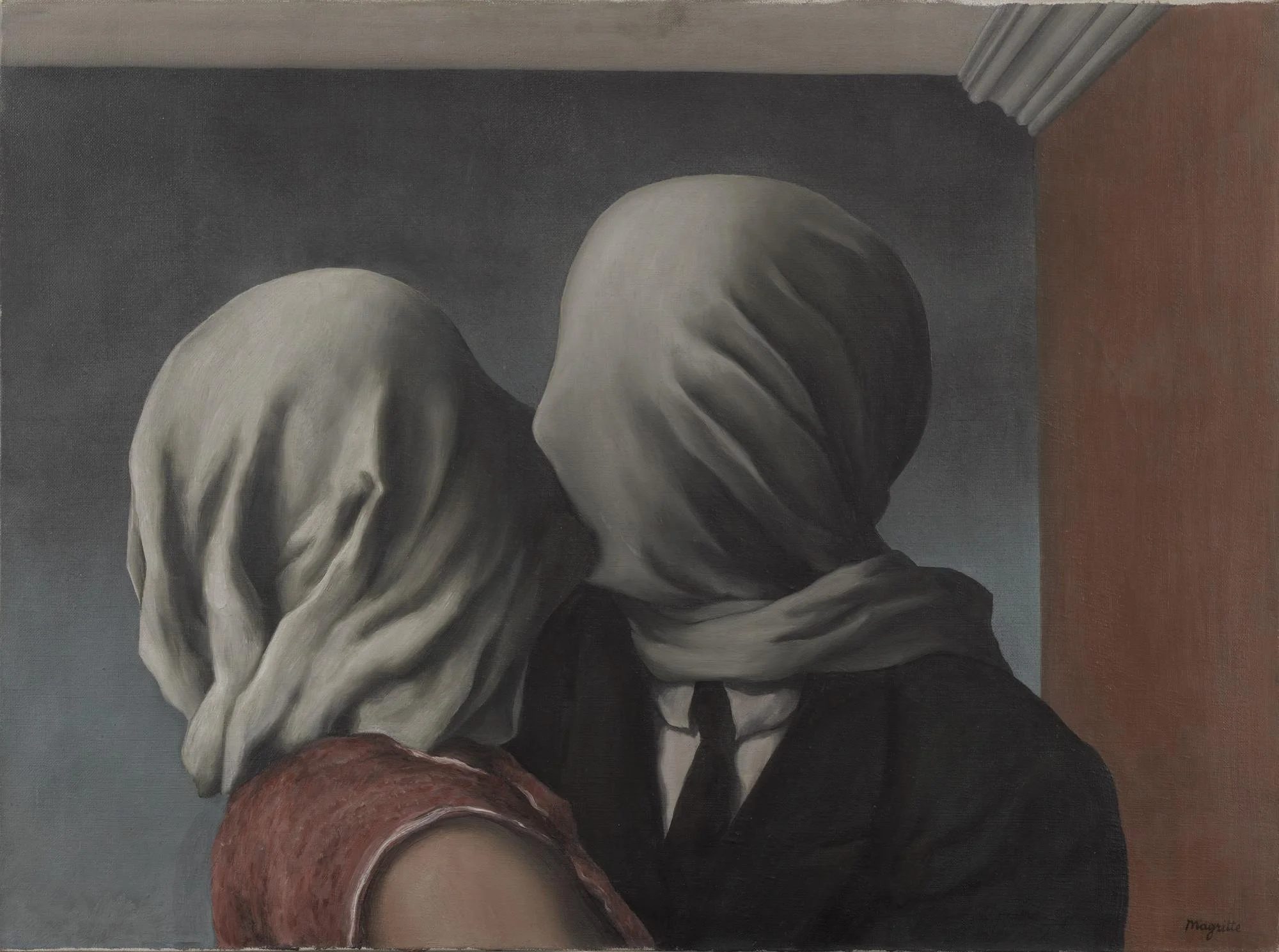
René Magritte’s 1928 painting The Lovers
The psychology of sound
I was not interested in illustrating a psychological theory, but in embodying one. Mellody’s ideas about co-dependence, about the confusion between connecting and merging, felt inherently musical. The whole piece attempts to hold two voices together without letting them collapse into one.
Contradiction is the point. There are flashes of joy, moments of frustration, and long passages of uneasy balance. Like many intense relationships, the music contains tenderness, volatility, productivity, and stasis. I wanted to show how these states can coexist rather than resolve.
The themes of One is Fun resonate strongly with René Magritte’s 1928 painting The Lovers, in which two figures embrace yet remain separated by veiled faces. The image captures a paradox of intimacy and distance: a closeness so complete that it obscures, rather than reveals, the self. This tension mirrors the relationship between the two violins in the piece, whose shared line binds them together even as it erodes their individuality — a union that is at once tender, suffocating, and unresolved.
A title with a twist
The title, One is Fun, comes from a cookbook my mother owns, a collection of recipes written for one person. On the surface it is playful and light-hearted, but in the context of a piece about co- dependence, there is a cruel irony. Just like a dysfunctional relationship, the piece itself is not “fun” at all. It is more like a cruel game, highly demanding and virtuosic, both physically and emotionally. The two players are bound together in a constant state of alertness, each dependent on the other for balance. Maintaining that closeness becomes the challenge.
It is a test of stamina and empathy, which mirrors the exhausting work of co-dependent human relationships.
Wrestling towards individuality
As the music drives towards its conclusion, the struggle for individuality intensifies. The lines twist further apart, only to be pulled back together. Neither wins. Yet through that continual resistance, something changes. The two voices begin to coexist, not as merged halves, but as distinct entities sharing the same space. The act of striving towards separation, of wrestling with that need, creates its own catharsis.
Two as one
When One is Fun was premiered by Pekka Kuusisto and the Australian Chamber Orchestra in Melbourne in 2019, the physicality of the piece came vividly to life. Watching two performers navigate that volatile relationship — listening, responding, and anticipating — revealed the emotional heart of the music. It reminded me that performance itself is an act of trust, a balancing of dependence and autonomy.
Ultimately, One is Fun is a duet about the paradox of being entwined: how closeness can both nurture and consume, and how the act of separating can be a life’s work.